Amber, for me, has always been associated with my Eastern European ancestry. Lithuanian relatives sent amber necklaces as gifts; when I wore one to a recent gathering of local Lithuanians to celebrate Christmas Lithuanian style, they were immediately assured that I had some right to be there (despite the fact that I could only smile in confusion when they addressed me in Lithuanian).
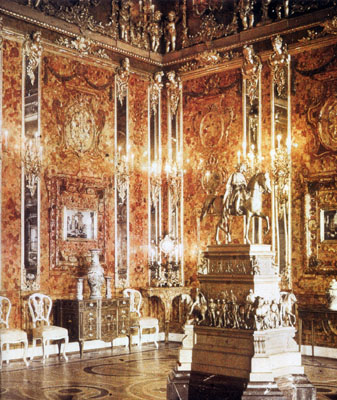
Amber is truly a symbol of Eastern Europe, especially the Baltic nations, on whose shores amber has washed up from the sea. In fact, there are even several amber museums in northern Eastern Europe dedicated to this glowing gem. When I was in Russia in 1994, the Amber Room at Catherine's Palace was just beginning to be restored from surviving photos. Now it has been fully restored, although the whereabouts of the original amber panels has not been discovered.
Amber has been primarily used in jewelry, but wearing it next to the skin requires special care to preserve its luminescence. Shopkeepers in Eastern Europe who have amber for sale will scold you if you touch any item on display. Today, much of the amber that appears in fashion jewelry in the West is made from pieces of amber that have been fused together. However, if you have a really nice piece of amber, you'll know it.

Subscribe to:
Post Comments (Atom)


No comments:
Post a Comment